We currently offer this Fiber Optics training course online, so students can learn at their own pace, on their own schedule, using a self-paced, online, and interactive learning approach. After each lesson, participants must take a quiz and score 80% or greater. Upon completing the online portion, students may then complete the lab portion of the course at any of the 24 Community Colleges around the state. This Fiber Optic training course covers best practices and fundamental principles behind basic data and voice transmission via fiber optic cable, as well as installation and termination techniques. Students will learn how to identify fiber types, recognize various connectors used in fiber installation, and install, terminate, splice, and test multimode or single-mode fiber optic networks according to existing standards. This course combines online theory and in-person, hands-on lab activities to prepare students for employment or advancement in the fiber optics industry.
Other skills covered include customer service, communication, leadership, attention to detail, and time management. After completing the course, participants get 16 hours of hands-on equipment training. Upon successfully completing both online and hands-on portions of the course, a participant will receive an ACCS credential. This credential may be applied toward credit courses at their local Community College.
We currently offer an online Meat Cutter Training Course that provides students with a flexible and interactive learning experience. Using our self-paced online approach, students can learn at their own pace and on their own schedule. After each lesson, participants must take a quiz and score 80% or greater. Upon completing the online portion, students will have the opportunity to complete the hands-on portion of the course, which will be held at our partner Community Colleges around the state. In this course, students will gain a strong foundation in meat cutting by learning how to identify different cuts of beef and pork, portion meat accurately, debone and trim meat, grind meat, slice meat uniformly, and properly package meat for storage. Additionally, students will learn about the laws and regulations that affect meat cutting in the food industry, including food safety protocols and sanitation procedures. Our hands-on portion of the course will allow students to apply what they have learned in the online portion of the course in a real-world setting. Our instructors will guide students through each competency and evaluate their accuracy, efficiency, and safety in completing the tasks. Upon successfully completing both online and hands-on portions of the course, a participant will receive an ACCS credential. This credential may be applied toward credit courses at their local Community College.
We currently offer this Hotel Operations training course online, so students can learn at their own pace, on their own schedule, using a self-paced, online, and interactive learning approach. After each lesson, participants must take a quiz and score 80% or greater. Upon completing the online portion, students may then complete the hands-on portion of the course at any of our Community Colleges around the state. Begin a strong foundation in hotel services by learning to manage, market, and serve well in the hotel and recreation industry. Explore all angles of customer service, including how to effectively motivate hotel employees, standardize professional conduct, and minimize customer service issues. Learn more about the laws and regulations that affect accommodations and recreational services within facilities management, including protocol regarding housekeeping and janitorial staff. Upon successfully completing both online and hands-on portions of the course, a participant will receive an ACCS credential. This credential may be applied toward credit courses at their local Community College.
This Food and Beverage training course is offered online, using a self-paced, and interactive learning approach. Upon completing the online part, students may then participate in the hands-on portion of the course at any of the 24 Community Colleges around the state.
Participants will gain a general knowledge of the key terminology and best practices used in customer service, food safety, management principles, and essential cooking techniques, laws, and regulations that affect food and beverage business services and facilities management. Professional soft skills are also taught and emphasized throughout this training. Upon successfully completing both online and hands-on portions of the course, a participant will receive an ACCS credential.
This comprehensive course is designed to provide participants with the knowledge and skills necessary to begin working as an entry-level mental health assistant.
This course helps students prepare to assume an entry-level job as a Mental Health Assistant. Students gain a basic understanding of mental health care concepts, including common mental health disorders, treatment options, and patient care fundamentals. They also build prerequisite knowledge about the role and responsibilities of a Mental Health Assistant throughout the patient care process, so they are ready to practice applying their knowledge in a lab setting.
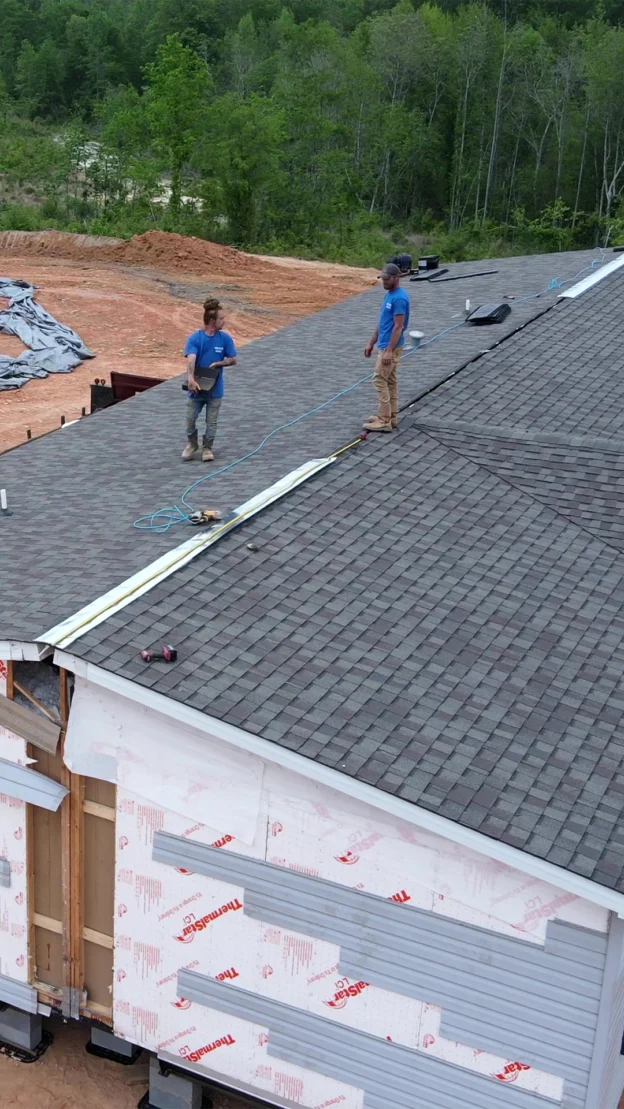
This online course provides a comprehensive study of the process of installing manufactured homes in the state of Alabama. The course covers the key factors that need to be considered for a successful installation, including Alabama zoning regulations, soil conditions, slope and elevation considerations, utility access, and climate factors. In addition, the course examines the International Residential Code (IRC) and the Manufactured Home Installation Standards of the Alabama Manufactured Home Commission. By the end of the course, students will have gained a thorough understanding of the requirements for a safe and stable manufactured home installation in the state of Alabama. This course is ideal for individuals seeking to become professional Manufactured Home Installers.
This Excavator Operator Training Course is designed to provide students with the knowledge, skills, and hands-on experience necessary to become proficient and safe excavator operators. Through a combination of online instruction, lab activities, and on-site training, students will learn about the different parts and functions of an excavator, master basic to advanced operation techniques, and gain an understanding of industry-standard safety protocols and maintenance procedures. The course covers essential topics, such as:
- An introduction to excavators, their types, and applications
- Theoretical understanding of excavator components, controls, and attachments
- Hands-on practice of basic to advanced maneuvers in a controlled environment
- Safety procedures, emergency shut-off protocols, and accident response Industry standards
- Regular maintenance and troubleshooting techniques
- By the end of the course, students will be able to identify and label excavator parts, demonstrate proper operation techniques, apply safety precautions, and perform basic maintenance. They will also be able to analyze and evaluate the efficiency and effectiveness of excavator use in different scenarios and apply their knowledge to real-world work environments.
This course is ideal for individuals seeking a career as an excavator operator, current operators looking to enhance their skills, or construction professionals wanting to broaden their understanding of heavy equipment operation. With a focus on practical learning and real-world experience, students will leave the course feeling confident in their ability to safely and effectively operate excavators in various construction and demolition projects.
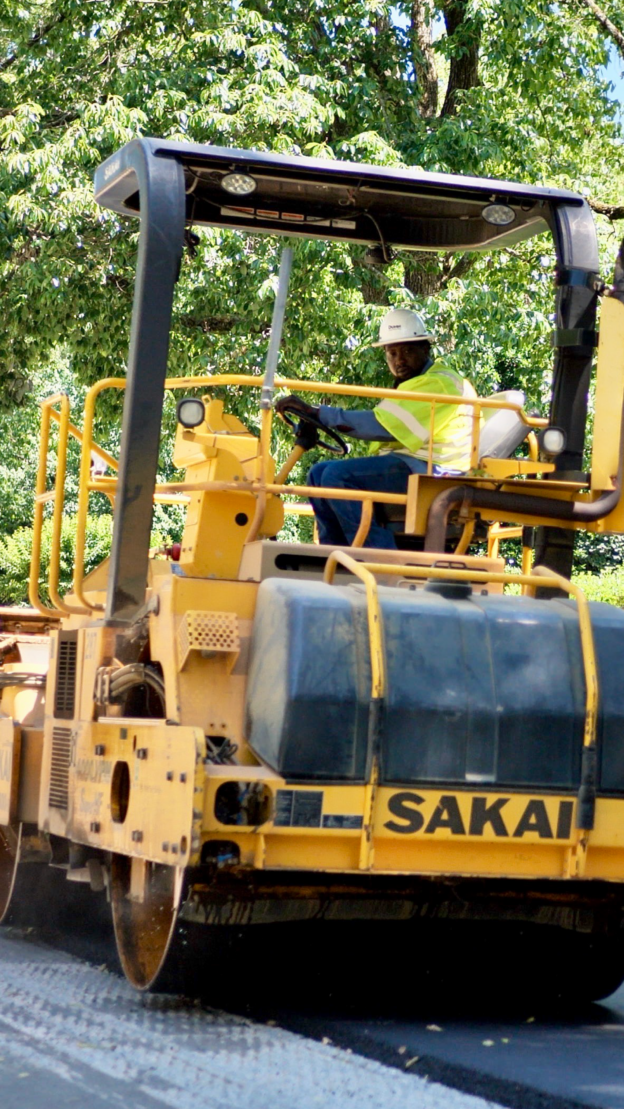
We currently offer this Heavy Equipment Operator (Asphalt Roller) training course online, so students can learn at their own pace, on their own schedule, using a self-paced, online, and interactive learning approach. After each lesson, participants must take a quiz and score 80% or greater. Upon completing the online portion, students may then complete the lab portion of the course at any of the 24 Community Colleges around the state. The operator will learn equipment applications, attachments, operating controls, preventive maintenance requirements, and basic operating techniques through online, self-paced coursework and hands-on lab training. This course is designed for students interested in a career in construction, heavy equipment, and earthmoving equipment operations. Choosing the right roller with the right features for a job is critical when it comes to asphalt compaction. Hands-on roller operation teaches the basics of asphalt compaction. In this course, operators of all skill levels will learn the concepts, objectives, and safety practices required for operating asphalt rollers in construction zone settings. This course teaches you how to safely operate an asphalt roller machine, perform routine maintenance and service, diagnose engines, troubleshoot problems, and understand electrical systems and hydraulics. After completing the course, participants get 16 hours of hands-on equipment operation training. Upon successfully completing both online and hands-on portions of the course, a participant will receive an ACCS credential. This credential may be applied toward credit courses at their local Community College.