Course Information
Instructor to Participant Ratio: 1 to 8
Lab Hours: 64
Course Requirements
Age Requirement: 16+
Course Description
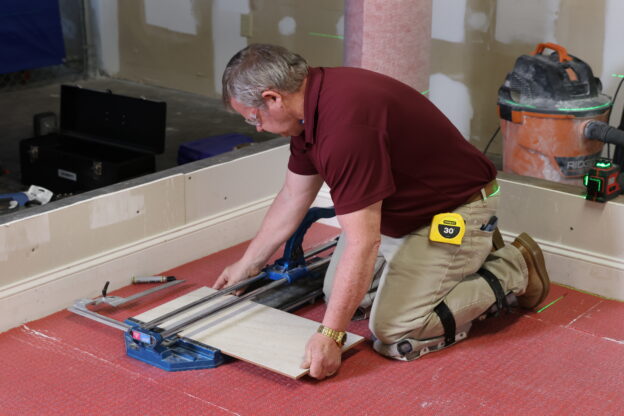
This course prepares participants to excel in the flooring industry. The training covers job site assessment, precise measurement and cutting for different flooring materials, and the installation of hardwood, carpet, laminate, and tile, with attention to alignment, finishing, and quality, as well as the inspection and repair of existing flooring. Participants begin with the challenges and career opportunities of flooring installation in Alabama. They then build hands-on skills such as evaluating a job site, selecting the right tools, and installation requirements to meet manufacturer guidelines. Participants who successfully complete the theory and hands on lab for this course earn an ACCS credential. Ala carte options are available for tile, laminate, hardwood, or carpet with two lab days per each selection.
Academic Pathways: This non-credit workforce training course may also help participants earn college credit through Prior Learning Assessment (PLA) or articulation opportunities toward select certificate or degree programs at participating Alabama community colleges. Credit awards are granted solely at the discretion of the receiving institution in accordance with its academic policies.
Course Information
Instructor to Participant Ratio: 1 to 15
Lab Hours: 8
Course Requirements
Age Requirement: 16+
Course Description
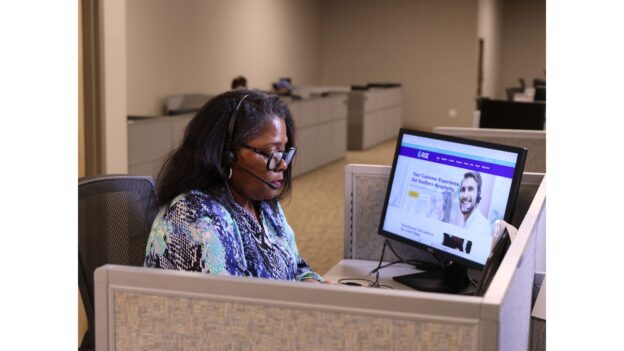
This course gives participants the knowledge and skills to begin working in an entry-level, customer-facing role, including frontline staff, team leads, and managers, as well as any professional looking to strengthen their customer service skills. This course focuses on the practical skills needed for direct, frontline customer service roles, such as call centers, service counters, and other positions where assisting customers is a primary job responsibility. Through online instruction and hands-on training, participants learn how to deliver high-quality, professional service and assistance before, during, and after the sale. Training covers the core characteristics of strong customer service, how to interact with customers at every stage of the sales process, and the tools and techniques used to keep service standards sharp over time. Participants who successfully complete the theory and hands-on lab for this course earn an ACCS credential.
Academic Pathways: This non-credit workforce training course may also help participants earn college credit through Prior Learning Assessment (PLA) or articulation opportunities toward select certificate or degree programs at participating Alabama community colleges. Credit awards are granted solely at the discretion of the receiving institution in accordance with its academic policies.
Course Information
Instructor to Participant Ratio: 1 to 15
Lab Hours: 8
Course Requirements
Age Requirement: 16+
Course Description
This course prepares participants to improve public health and make a meaningful impact in their communities as community health workers. Participants develop an understanding of dementia and best practices for providing safe, respectful, and person-centered support. It is well suited to participants pursuing a career in public health, current healthcare professionals expanding their community health knowledge, volunteers, and community advocates working to improve health outcomes where disparities exist. Course aligns with the National C3 Council’s skills and competencies. Participants who successfully complete the theory and hands on lab for this course earn an ACCS credential.
Academic Pathways: This non-credit workforce training course may also help participants earn college credit through Prior Learning Assessment (PLA) or articulation opportunities toward select certificate or degree programs at participating Alabama community colleges. Credit awards are granted solely at the discretion of the receiving institution in accordance with its academic policies.
Course Information
Instructor to Participant Ratio: 1 to 6
Lab Hours: 16
Course Requirements
Age Requirement: 16+
Course Description
This course introduces participants to commercial construction and the important role of carpentry helpers. The training begins with an overview of the industry and the jobs available, then covers safety as a cornerstone of the work. Participants learn the safe operation and maintenance of construction tools, proper handling, storage, and transportation of materials, and the basics of rough and finish carpentry, including framing and finishing. The course covers basic roof framing techniques, emphasizing safe practices, accurate layout, and the installation of common roof framing components. The course also builds verbal, non-verbal, and written communication and teamwork skills, preparing participants to assist skilled tradesmen. Participants who successfully complete the theory and hands on lab for this course earn an ACCS credential.
Academic Pathways: This non-credit workforce training course may also help participants earn college credit through Prior Learning Assessment (PLA) or articulation opportunities toward select certificate or degree programs at participating Alabama community colleges. Credit awards are granted solely at the discretion of the receiving institution in accordance with its academic policies.
Course Information
Instructor to Participant Ratio: 1 to 8
Lab Hours: 16
Course Requirements
Age Requirement: 16+
Course Description
This course prepares participants to begin a career as an electrical helper. Combining theory with practical skills, the training builds a foundation in electrical theory, terminology, and circuit principles. Participants learn the tasks an electrical helper performs, including assisting with the installation, repair, and maintenance of electrical systems, handling tools and materials, and keeping the job site clean and organized. A strong focus on safety covers personal protective equipment (PPE), safety standards, and the identification and mitigation of electrical hazards. Hands-on sessions develop skills in using basic electrical tools, measuring and cutting wire, drilling holes, and running and bending conduit, along with reading and interpreting electrical blueprints and schematics. Participants who successfully complete the theory and hands on lab for this course earn an ACCS credential.
Academic Pathways: This non-credit workforce training course may also help participants earn college credit through Prior Learning Assessment (PLA) or articulation opportunities toward select certificate or degree programs at participating Alabama community colleges. Credit awards are granted solely at the discretion of the receiving institution in accordance with its academic policies.
Course Information
Lab Hours: 30
Course Requirements
Age Requirement: 21+
Other Requirements: Must have a valid Commercial Driver’s License Class B (CDL B)
Course Description
This CDL School Bus Endorsement course is designed for participants who already hold a minimum of a Class B license and a Passenger endorsement and want to add a School Bus Endorsement. After completing the online portion and passing the state exam, participants earn a Class B Passenger and School Bus Endorsement. Participants who successfully complete the theory and hands on lab for this course earn an ACCS credential.
Academic Pathways: This non-credit workforce training course may also help participants earn college credit through Prior Learning Assessment (PLA) or articulation opportunities toward select certificate or degree programs at participating Alabama community colleges. Credit awards are granted solely at the discretion of the receiving institution in accordance with its academic policies.
Course Information
Instructor to Participant Ratio: 1 to 8
Lab Hours: 8
Course Requirements
Age Requirement: 16+
Course Description
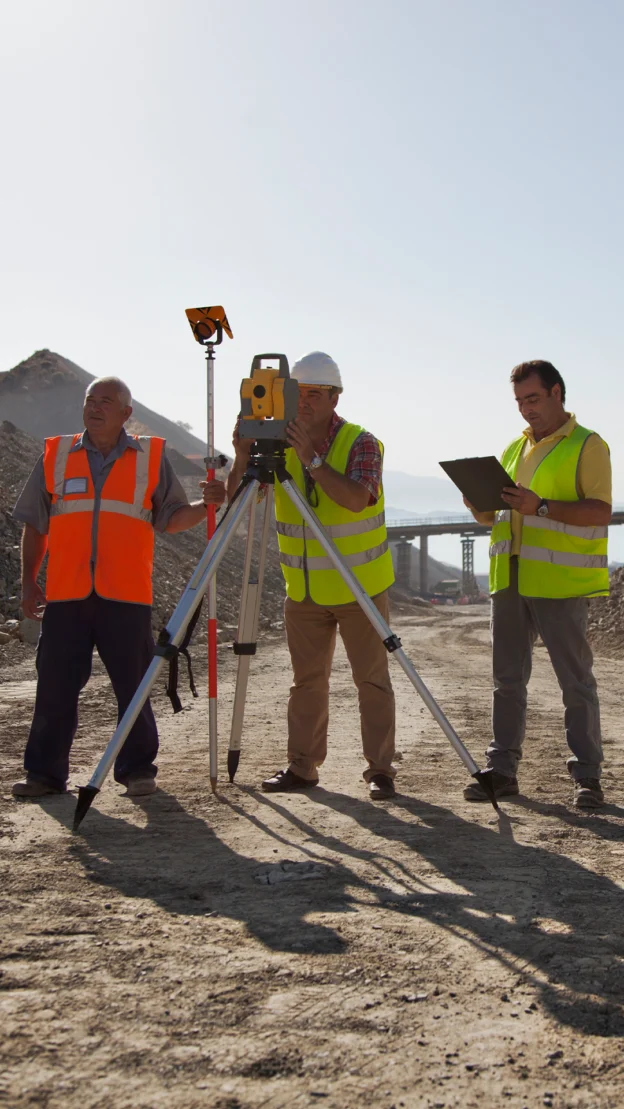
This course invites participants into the field of land surveying, where they learn the key principles and techniques of measuring, mapping, and representing the features of a piece of land. Participants gain a strong understanding of cadastral, topographic, and GPS surveying, along with field data collection, data processing, and the legal and ethical considerations that guide the profession. Whether participants are just starting out or building on existing skills, the course opens a path to career opportunities such as surveyor, mapping technician, or GIS specialist. Participants who successfully complete the theory and hands on lab for this course earn an ACCS credential.
Academic Pathways: This non-credit workforce training course may also help participants earn college credit through Prior Learning Assessment (PLA) or articulation opportunities toward select certificate or degree programs at participating Alabama community colleges. Credit awards are granted solely at the discretion of the receiving institution in accordance with its academic policies.
Course Information
Instructor to Participant Ratio: 1 to 6
Lab Hours: 32
Course Requirements
Age Requirement: 17+
Course Description
This course equips participants to provide essential care and support to patients under the supervision of licensed nursing staff in settings such as hospitals, doctor’s offices, surgery centers, and home healthcare. Participants develop an understanding of dementia and best practices for providing safe, respectful, and person-centered support. Participants build the knowledge and practical skills to work as a nursing support technician-certified (NST-C), including emergency response and first aid, infection control, safety measures, vital signs monitoring, bedside care, mobility assistance, nutrition and elimination, and bedside testing. The training also covers the NST-C scope of practice, communication, patient rights, confidentiality, documentation, professionalism, ethics, and cultural competence. Participants practice hands-on duties such as making beds, positioning patients, providing preventative care and bed baths, assisting with ambulation, foot, mouth, and peri-care, applying hot and cold therapies, and performing basic range-of-motion exercises. Participants who successfully complete the theory and hands on lab for this course earn an ACCS credential.
Academic Pathways: This non-credit workforce training course may also help participants earn college credit through Prior Learning Assessment (PLA) or articulation opportunities toward select certificate or degree programs at participating Alabama community colleges. Credit awards are granted solely at the discretion of the receiving institution in accordance with its academic policies.